A blender range that covers more than one shelf position
Most buyers do not need one blender, they need a blender line: a value-led opening price point, a mid-range product with more usable capacity or a stronger visual presence, and a compact or travel-oriented model that reaches a different shopper. Golden-Yee builds the category around a small number of proven platforms, each with a distinct housing concept, jug or cup format, motor class and control style, so the products in a range can be positioned separately without duplicating tooling. That structure also makes it easier to decide which model carries the volume in a promotion and which model carries the margin at full retail price.
- Classic jug blender platforms for entry and mid-range retail positions
- Dispensing and tap-equipped formats for countertop serving use
- Mini blender and travel tumbler sets for compact, single-serve demand
- Cup-set and grinder combinations that extend a blender into a multi-function product
Jug blender platforms and countertop formats
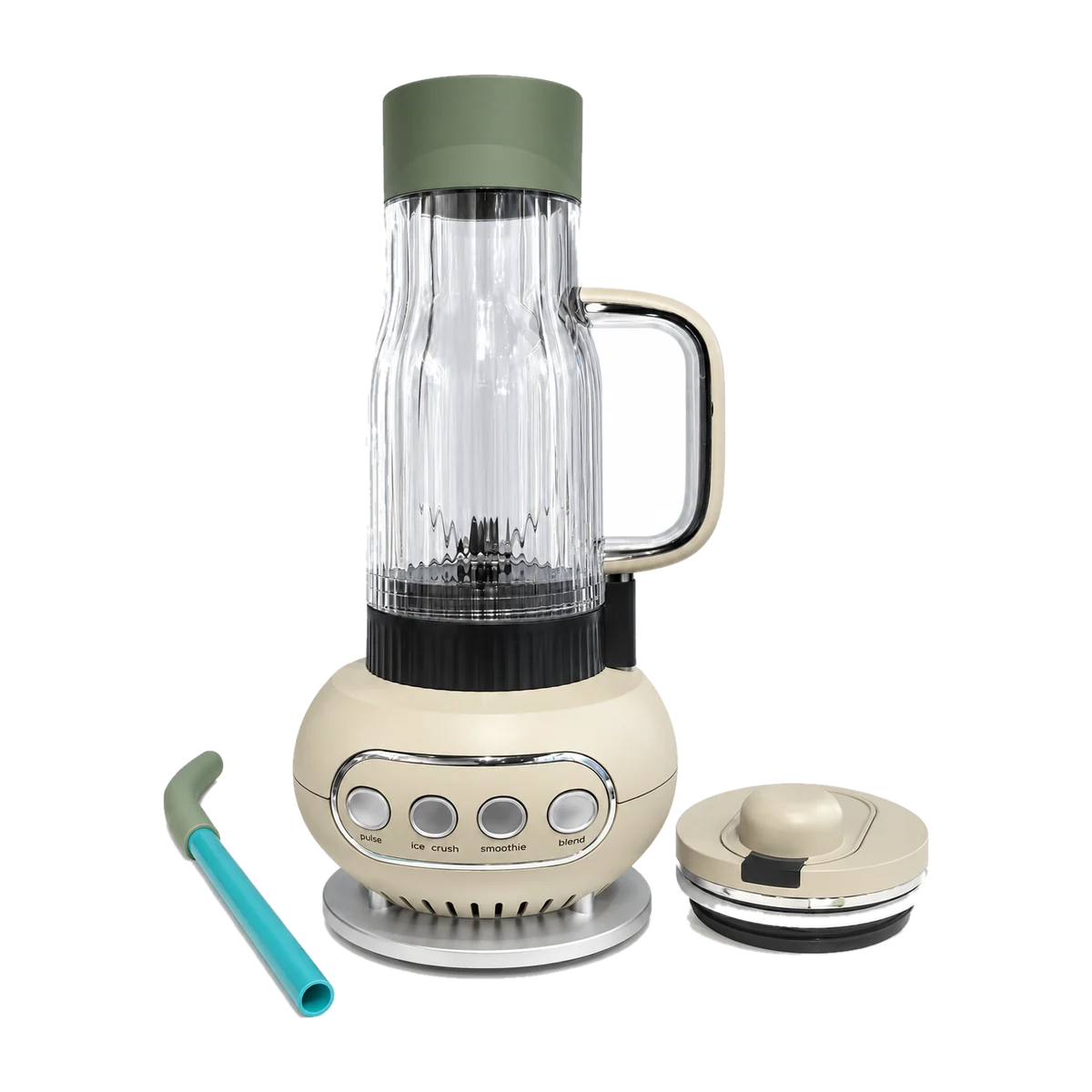
The full-size countertop range covers several approaches to the same job. Some models are built around a clear measuring jug with a stable compact base and rotary front control, which suits buyers who want a familiar, straightforward product on shelf. Others use a two-in-one format with a companion dry-grinding cup, which widens the use case without changing the main body. Dispenser versions integrate a tap into the jug so drinks can be served directly from the blender, and those models typically carry a stronger premium look through jug detailing, trim and a large rotary selector.
- Clear measuring jug with rotary front control and stable base on classic models
- Two-in-one configurations pairing a full-size jug with a dedicated grinding cup
- Integrated tap and dispenser formats for direct-to-glass serving
- Metal-look jug detailing and decorative trim for premium shelf positioning
Mini blenders and cup formats for compact retail
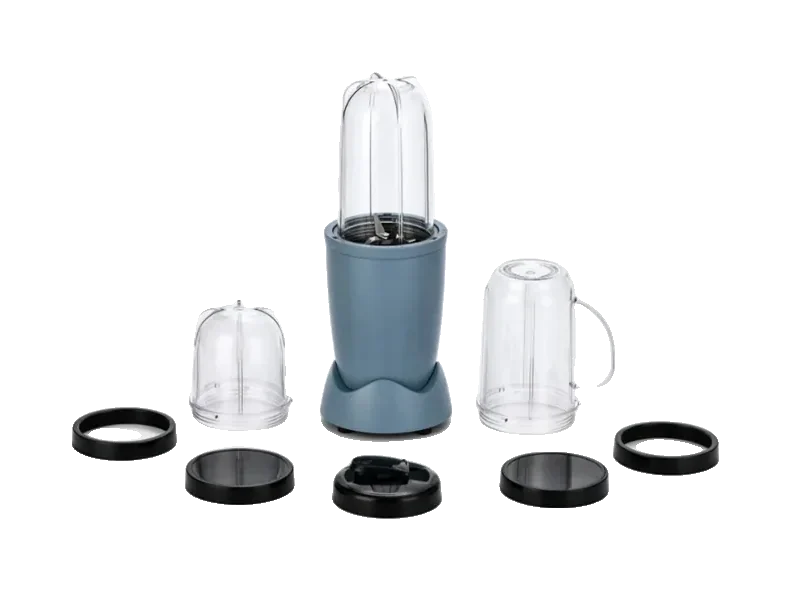
Compact blenders have become a category of their own, driven by single-serve habits, smaller kitchens and shoppers who want a product they can carry. This is where cup count, lid design, blade assembly and control layout do the selling. A three-cup set can cover blending and dry grinding from one base, while a travel-oriented model with a large tumbler, ice-crushing blade assembly and preset programmes with pulse control suits buyers targeting smoothie and iced-drink demand. Because these products are often bought as gifts or entry purchases, colour, tumbler finish, straw and retail packaging carry more weight than they do on a full-size jug blender.
- Multi-cup sets that combine blending and grinding from a single base
- Travel tumbler models with ice-crushing blade assemblies
- Preset programmes with pulse control for one-touch operation
- Colour, tumbler finish, lid and straw options for gift and entry retail
Private label blender customization
Customization for a private-label blender usually starts with the parts a shopper touches: housing colour and finish, jug or cup material, handle geometry, control type, trim and logo. From there the project moves into accessory content, cord and plug specification, rating label artwork, instruction manual language and packaging. Because the blender platforms already exist in several variants, a buyer can often build a distinct product by combining an existing body with a different jug, accessory set and control panel rather than funding new tooling. Where the volume and positioning justify it, housing and tooling changes can be developed for a product that is genuinely exclusive to the brand.
- Housing colour, gloss or matte finish, trim and logo treatment
- Jug, cup and lid material options with handle and spout detail changes
- Rotary dial, button panel and preset control options by model
- Accessory, carton and manual configuration for the destination market
Performance, safety and packaging details buyers compare
Blender buyers compare a predictable set of technical points before placing an order: motor class and rated power, jug capacity in litres or millilitres, blade material and assembly, whether ice crushing is supported, how the lid seals, whether the jug and blade assembly are dishwasher safe, and how easy the parts are to clean. Safety design matters as much as performance on a countertop appliance: interlock between jug and base, non-slip feet, thermal protection, and cord retention all affect how a product performs in returns and reviews. Carton dimensions, unit weight and loading quantity are equally practical, because they determine freight cost and whether a promotional programme can be delivered at the intended retail price.
- Motor class, rated power, jug capacity and blade material by model
- Ice-crushing capability and blade assembly design where supported
- Interlock, non-slip feet and thermal protection in the safety design
- Carton dimensions, unit weight, loading quantity and packaging format
Samples, order planning and export packing for blender projects
A blender project typically moves from platform selection to sample, then to pre-production approval and production. Samples let the buyer confirm blending performance, noise, jug feel and appearance in the intended market context, and they can be tested against the destination market's electrical and safety requirements before tooling or packaging is committed. Order planning then covers packaging format, carton configuration, container loading and shipping arrangements from Ningbo. For buyers adding a blender to an existing appliance range, the related models on this page show the platforms that pair most naturally with a countertop line, so a range can be built with consistent styling and price steps.
- Sample production for performance, noise and appearance approval
- Pre-production confirmation of colour, packaging, label and accessories
- Carton and container loading planning for the agreed order quantity
- Platform combinations that keep a countertop range stylistically consistent