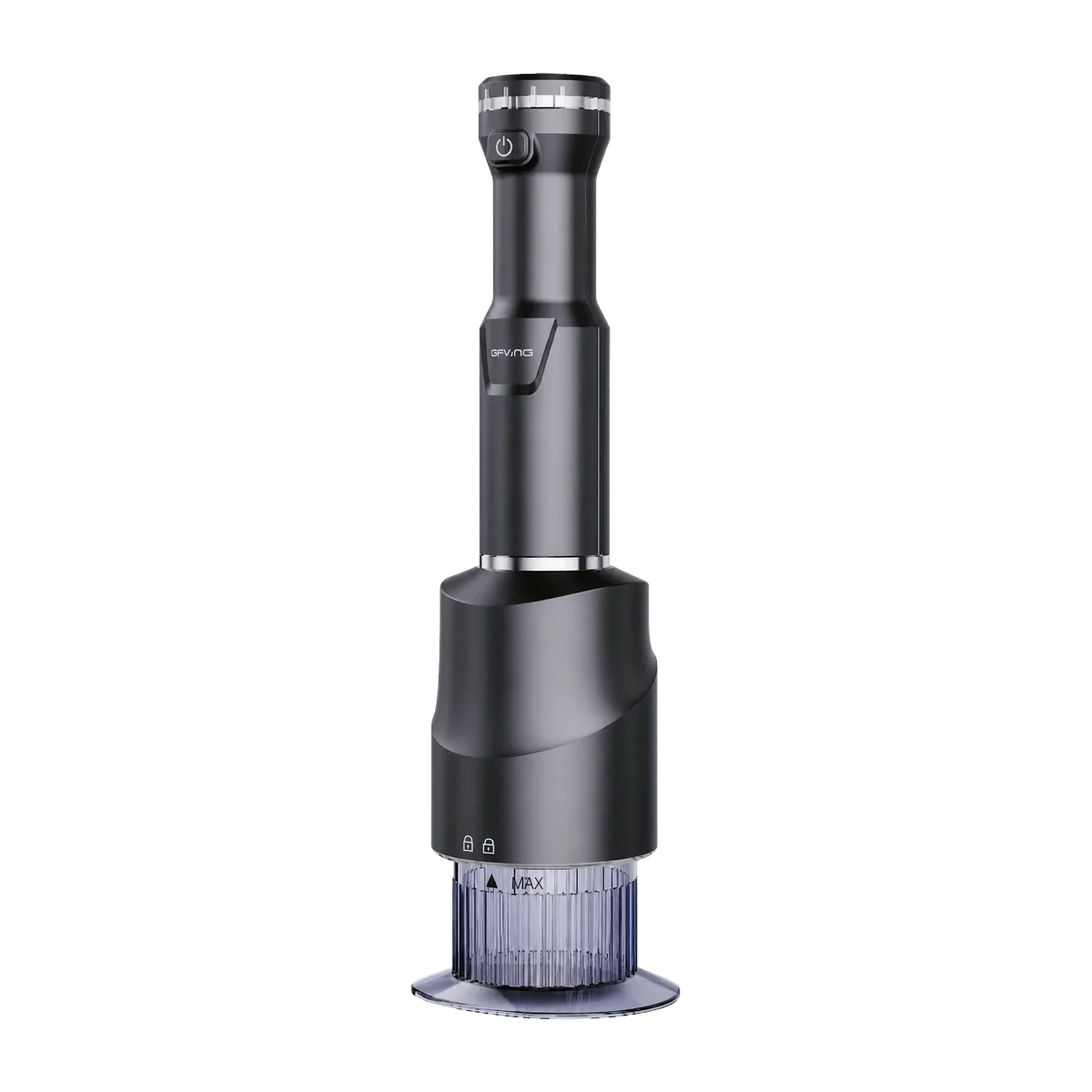
A compact dessert platform built for range building
The ice cream maker category works well as an add-on to an existing kitchen appliance range. It is seasonal, giftable and visually appealing on shelf, and it does not need the same volume of accessories as a blender or a mixer to feel complete. The current platform is a single upright countertop unit with a detachable blade and two stackable 350 ml cups, which lets one machine prepare several portions in sequence without a large bowl.
- A single upright countertop unit with a compact footprint for shelf space and small kitchens
- Two 350 ml stackable cups, so portions can be prepared and stored in sequence
- A detachable blade for easier cleaning after preparation
- Five preset dessert programs covering familiar frozen-dessert preparations
Motor, cups and program design
Frozen dessert preparation needs consistent drive at low speed, because the mixture thickens as it freezes. The platform uses a motor in the 300 W to 350 W range, paired with a drive system that keeps the blade moving as the mixture sets. The five preset programs take the guesswork out of the process for the user: instead of judging when a dessert is ready by eye, they select a mode and let the program run through its working rhythm.
- 300 W to 350 W motor options across the platform
- Two 350 ml cups, sized so a single portion fits comfortably and the cups can be stacked for storage
- Five preset programs that set the working rhythm for different dessert styles
- A detachable blade that simplifies cleaning compared with a fixed mixing element
Customisation for ice cream maker OEM projects
Ice cream makers are often bought on appearance as much as function, so customisation tends to focus on the parts a buyer or shopper actually sees. Housing finish, the look and feel of the programme selector and the cup design carry a lot of the product character, while packaging does much of the selling on shelf. All of these can be aligned to a private-label identity as part of a project brief.
- Voltage and plug variants for 110–120 V and 220–240 V destination markets
- Housing colour, decorative finish and logo placement for private-label branding
- Programme interface treatment, including selector style, icons and markings matched to your brand language
- Cup set and detachable-blade specification, plus retail packaging and instruction manual language
Certification and compliance for dessert appliances
A countertop ice cream maker is a motorised appliance with food-contact parts, so compliance work covers electrical safety, electromagnetic compatibility and the materials that touch the mixture. Which route applies depends on the destination market, and the earlier those requirements are raised, the fewer changes are needed later on the rating label, the internal wiring and the manual.
- CE and UKCA routes supported for Europe and the UK
- UL or ETL listed programs supported for North American configurations
- SASO and comparable national schemes addressed for Gulf and other regional markets
- RoHS, REACH and applicable food-contact material requirements reviewed against the destination market
Sourcing and inspection points
Dessert appliances are judged on results, so inspection focuses on whether the machine can be relied on to produce a consistent texture repeatedly. Motor behaviour under load, blade seating, cup fit and the consistency of the program cycle are the points that decide whether a customer keeps using the product, and they are the ones we check from sample stage through to shipment.
- Pre-production samples run through all preset programs before approval
- Incoming checks on motor, gear drive, blade, cup and electronic control components
- Assembly checks for blade seating, cup sealing, switch action and housing fit
- Pre-shipment verification of program function, cleaning access, packaging and documentation
Channel fit for ice cream maker lines
Dessert appliances are strong gift and seasonal items, and they also perform well as a differentiated addition to a general kitchen appliance listing. Supermarket and department-store own-label ranges tend to position them in gift-adjacent or summer assortments. E-commerce sellers use the compact format and the twin cups as visual hooks, while gift channels lean on finish and packaging to justify a higher shelf position.
- Supermarket and department-store own labels: seasonal and gift-adjacent assortment entries
- E-commerce and marketplace sellers: a compact format with twin cups as a clear listing hook
- Gift channels: premium finish and packaging for higher shelf positions
- Houseware ranges: dessert appliances as a differentiated add-on to preparation lines