Two countertop slicer platforms, one preparation concept
The vegetable slicer range is deliberately compact. Both platforms are designed to sit on a countertop, take whole or halved vegetables through a top feed, and discharge processed pieces through a cutting drum that can be swapped for different textures. Buyers typically use them to fill a practical, everyday-preparation slot in a kitchen range rather than a premium appliance position, which keeps the specification focused and the shelf ladder simple to manage.
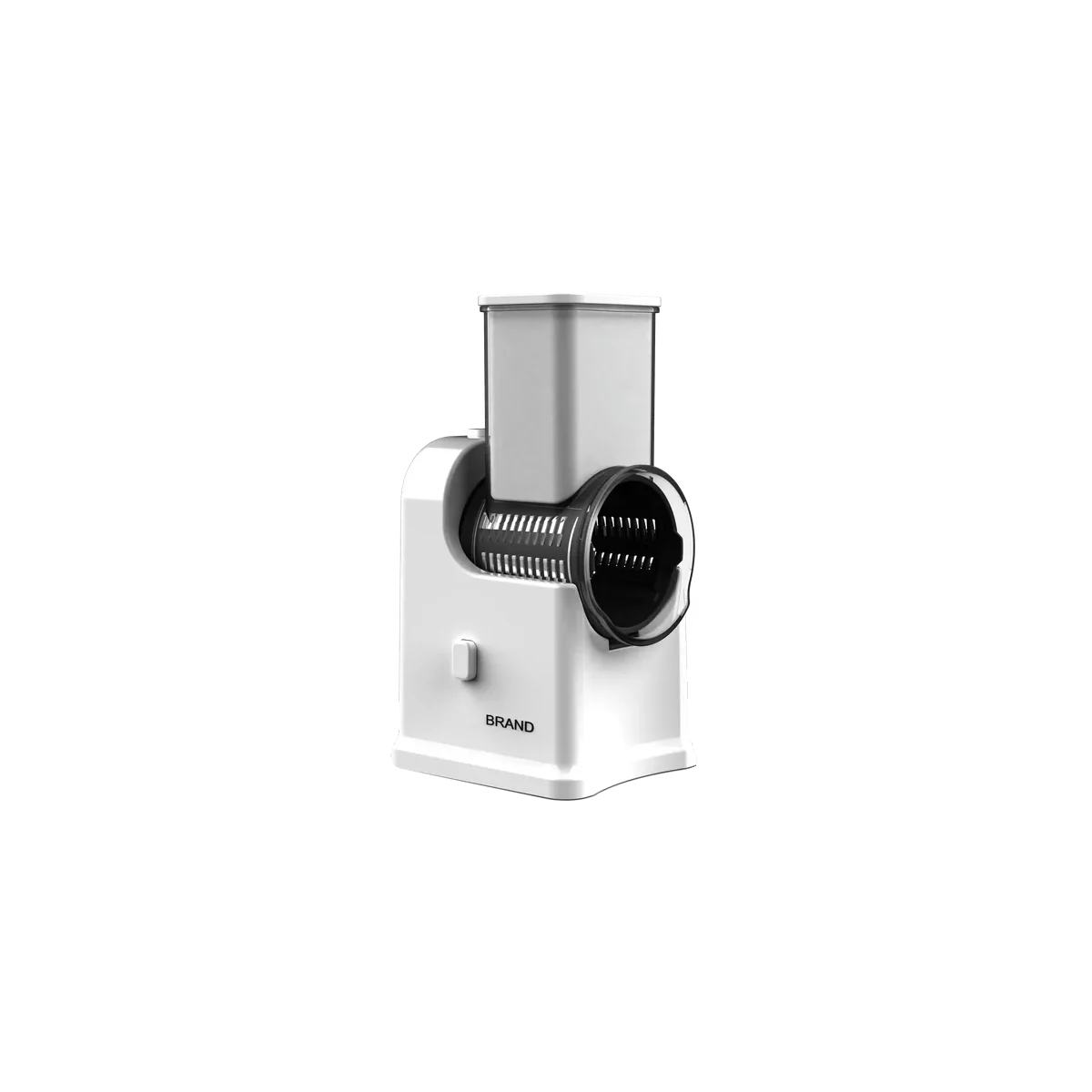
- DL101, a large top feed chute with a side-mounted cutting drum in a compact upright body
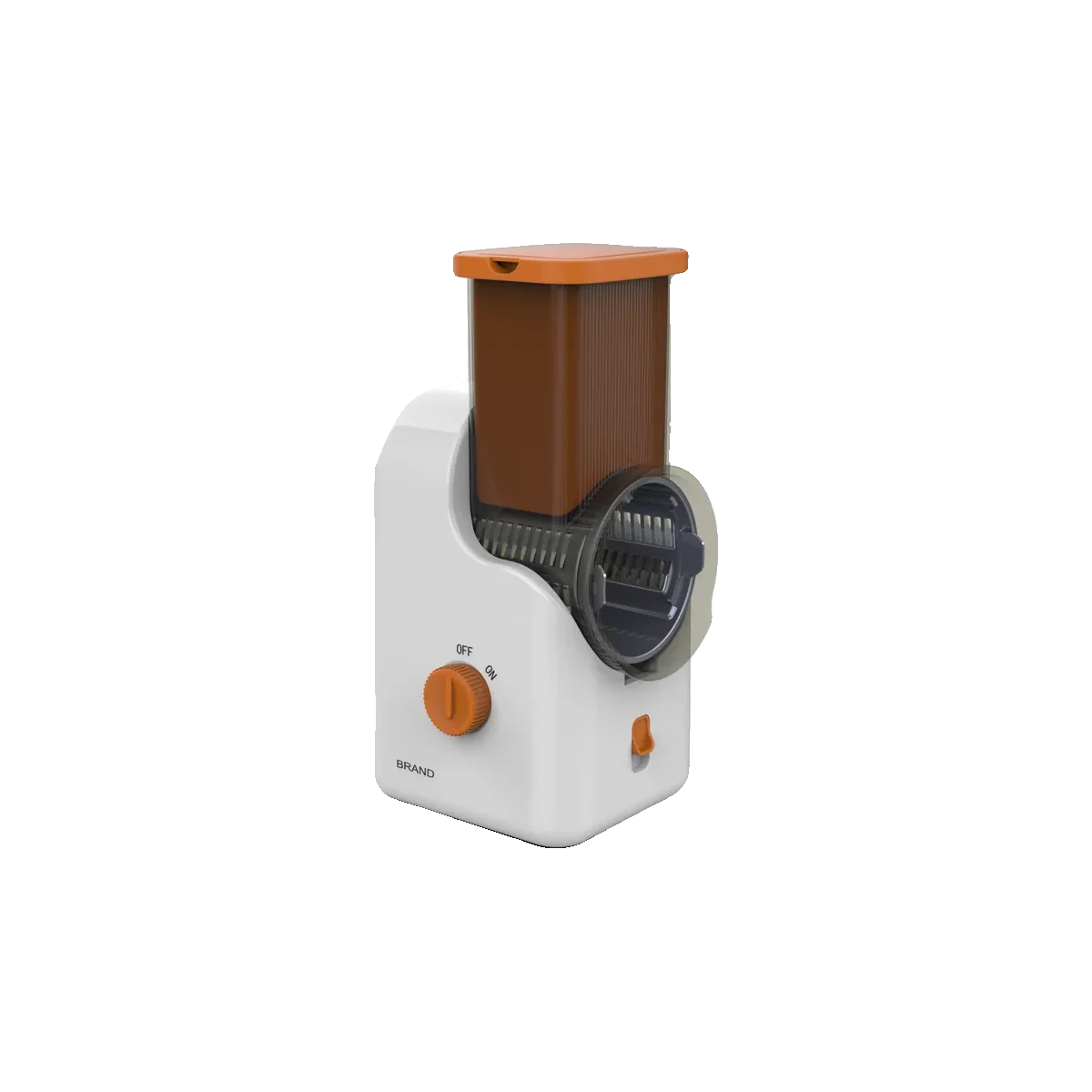
- DL102, a wide feed tower with a front cutting outlet and a distinctive two-tone housing
- Both built for countertop use, so they suit small kitchens, apartment living and rental markets
- A drum-based cutting system keeps the tool count low and the cleaning routine simple
Motor, cutting drums and everyday performance
Slicing vegetables is a low-load, high-repetition task, so the motor is chosen for steady torque and quiet running rather than headline power. The current platforms run on 70 W and 80 W motors, which is enough for continuous home preparation of carrots, cucumbers, courgettes, potatoes, cabbage and similar produce. The cutting interface is a stainless-steel drum, and the drum set is what defines the textures a model can produce: thin or thick slices, fine or coarse shreds and grating.
- A 70 W motor platform on DL101 and 80 W on DL102, matched to continuous home preparation
- Stainless-steel cutting drums for slicing, shredding and grating, with the drum set confirmed per model
- Side-mounted or front-facing drum access depending on the platform, which affects how the user clears processed pieces
- Feed geometry sized for common vegetable sizes, so users spend less time pre-cutting
Salad maker OEM customisation
Because a slicer is a visually simple product, its differentiation usually comes from the drum set, the housing finish and the packaging. Buyers building a salad maker OEM program under their own brand typically confirm those three points first, then move to controls and accessory details. Each decision feeds back into the bill of materials and the artwork, so locking them before sampling keeps the project on a single track.
- Voltage and plug configuration for 110–120 V and 220–240 V destination markets
- Housing colour, two-tone treatment, printed graphics and logo placement for brand identity
- Cutting drum set selection, combining slice, shred and grate options matched to the target recipes
- Control style, power cord length, retail packaging format and the instruction manual language
Compliance, food contact and export documentation
A vegetable slicer touches food directly, so compliance covers both the electrical side and the material side. Electrical requirements follow the destination market framework, while the drum, feed and any food-contact plastic parts are reviewed against applicable food-contact expectations. Both are treated as project decisions at specification stage, because they influence material selection and the wording on the rating label and the manual.
- CE and UKCA routes supported for European and UK listings
- UL or ETL listed programs supported for North American configurations
- SASO and comparable national schemes addressed for Gulf and other regional markets
- RoHS, REACH and applicable food-contact material requirements reviewed against the destination market
Sourcing and inspection points for slicer programs
The failure modes buyers report most often on slicers are mechanical rather than electrical: a drum that loses its edge, a feed chute that flexes, or a processed-piece outlet that clogs with wet produce. These are visible at sample stage if the sample is tested with real vegetables rather than an empty check, which is why our review process pushes for realistic preparation trials before approval.
- Pre-production samples tested with representative vegetables, not just a visual check
- Incoming checks on motor, drum material, cutting edge, switch and housing components
- Assembly checks for drum seating, feed alignment, switch action and housing fit
- Pre-shipment verification of function, drum edge condition, cleaning access, packaging and documentation
Channel fit for vegetable slicer and salad maker lines
Slicers sell strongly where home cooking culture and small-kitchen living overlap. Supermarket and hypermarket own-label programs use them as an accessible preparation appliance with a strong shelf packshot. E-commerce sellers benefit from listing a model with several drum functions and clear imagery of the finished cut, while gift and seasonal houseware channels tend to favour the two-tone platform, where the design itself carries part of the appeal.
- Supermarket and hypermarket own labels: a straightforward preparation appliance in shelf-ready packaging
- E-commerce and marketplace sellers: multi-drum models with clear cut-type imagery
- Gift and houseware channels: design-led, two-tone models with premium cartons
- Salad and healthy-eating ranges: drum sets aligned to recipe-led marketing